Is Nike Running away from Taxes?

America is known as the land of opportunity. Capitalism is the critical foundation of this wonderful country. Businesses, small and large, do well in such a developed economy. The objective of these firms is to minimize expenditures and maximize revenue streams. A significant amount of expenses come in the form of federal taxes. To some large companies, these taxes are “optional.”

A tax haven is a country that offers companies or individual’s small amounts, if not, zero tax liability. This allows for a legal loophole to circumvent domestic taxes. This is an ethical issue that many fortune 500 companies face. Is it ethical to move funds into more tax-friendly locations to assist in achieving maximal profits?

Many companies are doing this and it’s perfectly legal! But just because it’s legal, does it mean that it’s also ethical? Nike is one of the biggest offenders of this. Nike shelters significant amounts of money ($10.7 billion to be exact) in offshore accounts in Bermuda. Nike pays 1.4% ($149.8 million) to foreign governments instead of a $3.7 billion tax bill to the US. This is a big chunk of change that Nike is pocketing.

There was The 2017 Tax Cut and Jobs Act that required a one-time repatriation on companies with foreign subsidiaries. This was enacted to obtain more tax-revenue from companies that have avoided past domestic income taxes. Trump even decreased the effective corporate tax rate from 35% to 21% in hopes that more off-shored money will come back into the US economy. Critics say that this one time tax to corporations still doesn’t solve the issue of tax-avoidance, it is just seen as an apology from companies that partake in these actions.
Is it unethical of Nike to continue using tax havens?

https://www.investopedia.com/terms/t/taxhaven.asp

https://www.taxpolicycenter.org/briefing-book/what-tcja-repatriation-tax-and-how-does-it-work

https://www.stock-analysis-on.net/NYSE/Company/Nike-Inc/Analysis/Income-Taxes#Accounting-Policy

https://www.oregonlive.com/business/2019/01/profits-double-tax-payments-fall-at-nike-attracting-attention-of-eu-regulators.html

https://corporatefinanceinstitute.com/resources/knowledge/other/what-is-tax-haven/

https://www.thebalance.com/trump-s-tax-plan-how-it-affects-you-4113968

Facebook and Russian “Trolls”

In the spring of 2016, a Facebook employee working to eliminate Russian political influence via cyberwarfare noticed something strange about pages and trends occurring on the site recently. When the employee reached out to Facebook’s security chief, Alex Stamos, the two quickly realized there was a much larger problem on hand than previously thought. What was occurring was a massive effort by Russian hackers to politically probe Facebook accounts with the goal of creating disinformation, civil dissonance, and facilitating accounts that supported their political agenda. Despite initial doubts from top Facebook leaders including Mark Zuckerberg himself, by January of 2017 the social media giant had created a group called Project P, created with the intentions of researching just how deep this influence was on their users. Once the situation had become more public, Facebook found itself in the middle of multiple ethical dilemmas that are still facing them today.

While the situation may seem like more of a technical issue and a breach of security, in the context of the political spectrum as well as the lack of transparency within the case, Facebook found themselves with a massive moral obligation to do the right thing here. Firstly, the findings suggested that hackers were using Facebook as a medium to deliver hacked email accounts to journalists. It was also suggested that Facebook had been used to send the WikiLeaks used by Donald Trump to damage Hilary Clintons 2016 campaign. Additionally, in early 2017 Washington had released information regarding Vladimir Putin’s efforts to run an aid campaign for Donald Trump in his 2016 campaign using Facebook. At this point the results of the findings going public could be incredibly damaging to the company. Not only this, but Republicans and Democrats were divided over the issue. Republicans were accusing Facebook of repeatedly pushing a leftist agenda, and Democrats were angered over the downplaying of the situation up until this point. Facebook had also been accused throughout for a lack of transparency and even denying the accusations that any interference had occurred. The Facebook CEO had even been asked about the investigation before the Supreme Court in April of 2018, admitting to not being as proactive as they should have been initially.

While we are not completely certain of what is being done to eliminate this influence, one thing is for certain: Facebook was and still is facing an ethical dilemma in who it allows to create content on its platform and how they monitor that content. Additionally, Facebook has a duty to be as transparent as they can with not only stakeholders but also the general public in dealing with their findings.

   Sources:

Impossible Foods

There are plenty of companies that have meat alternatives available, but not all of them are trying to do something new and innovative. Impossible Foods wants to create something more that helps the world in many ways.

Impossible Foods was founded in 2011 with the mission:

To drastically reduce humanity’s destructive impact on the global environment by completely replacing the use of animals as a food production technology. We intend to accomplish this mission within two decades by creating the world’s most delicious, nutritious, affordable and sustainable meat, fish and dairy foods directly from plants.

Image result for impossible foods logo

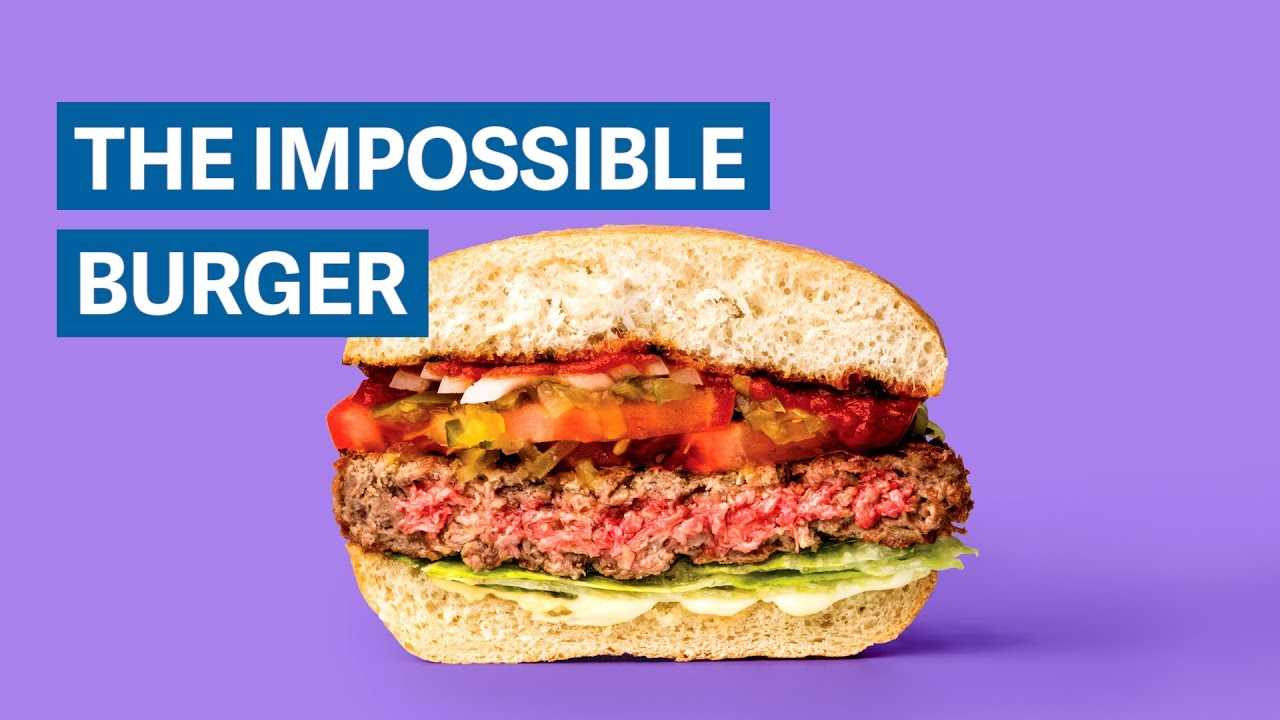
They want to create a synthetic meat from plant based proteins, that is not only more affordable than current products, but is also tastier and more desirable. Currently, they only produce a beef alternative, but they plan on expanding over time. They claim that this burger uses 95% less land, 74% less water, and emits 87% less greenhouse gas than a traditional beef patty.

The most interesting thing about this company is how open they are about the process of creating this plant based patty. The m,olecule that gives meat its flavors and smells is called heme, and it’s not very easy to recreate. The scientists at impossible foods found that soybeans create a functionally identical protein called leghemoglobin. They then spliced it into yeast, and breed yeast in fermenting tanks like the way beer is made, but this protein is the result instead. This allows the burgers to be sold at a competitive price. With this process out in the open, perhaps more companies will attempt to make their own meats, allowing competition to drive down the prices even more.

Image result for impossible burger

Impossible burgers are available in over 5,000 restaurants all over the United States, Hong Kong, Macau, and Singapore. They are planning on bringing the meat to grocery stores later this year. Since they are spread all over the world, they reach a lot more people than smaller companies. As more people learn about Impossible, they will continue to grow as popularity expands their market from mostly people who cannot eat meat, to people who will change what they eat in order to help the environment.

Sources:
https://medium.com/impossible-foods/how-gmos-can-save-civilization-and-probably-already-have-6e6366cb893
https://medium.com/impossible-foods/the-mission-that-motivates-us-d4d7de61665

Who knew meat was bad?

Eating meat is a staple of human culture that has been around for millennia, and with good reason. As our population on earth continues to grow, certain production processes have become increasingly unethical in order to increase output to satisfy demand. One of these is the production of meat. There are many different factors that make this an unfortunate truth. Some of this stems from the conditions that animals are put through in a commercial farming environment, but it also comes from the massive carbon dioxide emissions generated from all parts of the production process.

agriculture animal animal photography blur

Beef is extremely inefficient to produce. One kilogram of beef requires over 25 kilograms of grain, and over 1500 liters of water. Other types of meat, such as pig and chicken, are a little better, but are still inefficient. This grain used for production takes up over 30% of the world’s surface. If this grain was used to feed people, it could nourish an additional 3.5 billion people.

agriculture arable barley blur

As we use all of this feed and water, it needs to be harvested, collected, transported, and distributed to the livestock. In our industrial world, this process is highly industrialized with machines that spit out greenhouse gasses. This creates 15% of all greenhouse gasses produced in the world.

The animals are required to ingest copious amounts of antibiotics, so that the meat will be disease free and to promote weight gain. Over 80% of the antibiotics in the United States are used in livestock production. This large usage of antibiotics has a negative effect on humanity, as it makes bacteria more resistant to these antibiotics, making more and more people sick.

Image result for antibiotics

Finally, as much as people hate to admit it, animals do feel things, and when they are abused during this process, it does hurt them mentally and physically. In some cases, this does lower the quality of the meat. When cows are farmed for milk, they are forced to constantly breed in order to constantly produce milk. While we certainly can use the animals as resources, we do not need to abuse them to get these resources.

Ultimately, we need to cut down on animal consumption in order to increase human, animal, and the planet’s well-being. In my next blog post, I will to discuss a company that aims to do just that: Impossible Foods.

Sources:

http://science.sciencemag.org/content/360/6392/987

https://iopscience.iop.org/article/10.1088/1748-9326/8/3/034015

https://theconversation.com/five-ways-the-meat-on-your-plate-is-killing-the-planet-76128

Impossible goals?

The beginnings of Impossible Foods came from when the now CEO, Patrick Brown, took an 18 month sabbatical in order to attempt to eliminate intensive animal farming, which he determined was the world’s largest environmental problem. After raising attempting to raise awareness at a conference in 2010, he found that the better solution would be to offer a competing product on the market. Impossible’s whole mission statement is based around creating a plant product that simulates real meat.

This year, Impossible released a new and improved, gluten free version of the Impossible Burger. They claim this burger is better for the environment than a traditional burger, but how can we be so sure? Well, Impossible enlisted Quantis, a company that focuses on sustainability metrics, in order to find out just how much better the production of this burger really is, and the results are impressive.

From this data analysis, we can see that Impossible Burger production truly is better for the environment than traditional beef. They are advocating for the growth of this sector in order to really make an impact on the environment. The CEO has stated that they are currently attempting to produce “whole cuts of beef”, which would entice a new group of people into the market, and, as he believes, would disrupt the beef and meat industry as a whole.

Overall, I think that the goals that Impossible has set out for them selves are lofty, but they will eventually reach them. As they continue to produce more and better quality products, more companies will follow suit, helping our planet hopefully become more healthy over time.

Sources:

https://impossiblefoods.com/if-pr/LCA-Update-2019
https://thespoon.tech/video-impossible-foods-ceo-pat-brown-says-theyll-tackle-steak-next/

The Blog

Ryan Henrici / Is Nike Running away from Taxes?

Thomas Eckerson / Facebook’s Russian Hacking Problem

Nathan Gellin / Impossible Foods saving the meat market

Garrett Brennan / LIBOR

Jackson Wikstrom / The Boeing Company

Design a site like this with WordPress.com
Get started