Featured

The Blog

Ryan Henrici / Is Nike Running away from Taxes?

Thomas Eckerson / Facebook’s Russian Hacking Problem

Nathan Gellin / Impossible Foods saving the meat market

Garrett Brennan / LIBOR

Jackson Wikstrom / The Boeing Company

Solutions? Next Steps?

Where does this leave the public? Left in the dark? Will there ever be reform that works or is that just the nature of Wall Street and the global financial system? In 2008, rating agencies that inaccurately rated mortgage backed securities(MBS) for fees from banks faced no repercussions, and 1 banker from credit Suisse went to jail out of everyone involved in the misbehavior surrounding practices of shorting(bet against) credit default swaps which was the underlying cause for the 2008 crisis. This Libor scandal occurred during the same time, as did the manipulation of FOREX markets. Over the past 10 years traders from JP. Morgan have spoken out saying they and other traders within the firm used wash trading tactics to manipulate various commodity prices, specifically gold. And if it’s not the banks running scams to increase profits, its untrustworthily brokers like Jordan Belfort who would push shit stocks to clients, hold rat holes with a majority of the shares, drive the price up and then dump his position at the top leaving his clients absolutely REKT. Or we have Bernie Madoff who created the biggest and most successful pyramid scheme in history. Justice seems to find these scandals, as both these individuals did jail time, but it seems at the point when the cover is finally blown on these scandals, tax payer money is lost, investors are left with nothing, and wealthy banks or people pay their fines and see no real repercussions, returning to various other mischievous behavior.

In essence, Wall Street has become a game that the average citizen just shouldn’t play. Like Libor, most banking scandals are identified, and “solved” but this only leaves banks and financial institutions to seek greed elsewhere. It seems as though banks have a total disregard for ethical standards.

In my opinion, there isn’t much to be done about this problem. The reason people try to invest, or gamble, or buy seminars, and webinars and courses claiming to teach them how to make money is because people have this subconscious idea that wealth is the goal, and they will be inherently happier and better off if that are rich. This same idea holds true for banks and is the reason they continuously do what they do. Granted they have shareholders to attest to and a bottom line to meet, its usually individuals within banks who know the bonuses and promotions they will receive, in-turn money they will make, if they are able to produce or show big profits for the bank. So, they decide to use scandalous and fraudulent ways in order to outperform their colleagues and help outperform other banks to get ahead. Wall street in a disgustingly competitive place and people lost trying to conquer it.

The media doesn’t have much influence on wall street. No matter what a bank does, they will never be honest with media outlets, so newsfeeds are left just reporting the nonsense the banks’ lawyers and spokespeople tell them. Artificial bullshit. Only until a bank in prosecuted, or a trader is arrested, does the media get good, more truthful information about a situation.

Unless the structure of shareholders and capitalism changes, and people lose the desire to outperform their competitors and make more money, I think there will always be people who chose to do it in unethical ways. If people can find ways to cheat the system, and they see riches on the other side, some will not resist their id and do exactly that. Then find any which way to justify their actions. It’s unfortunate because there are a lot of honest, good people who work in this field who would never ditch ethics for more money, yet the few who do consistently ruin it for everyone else, and give Wall Street a bad rap.

What happens now? What can be done?

In the opinion of the major regulatory agencies, this was the last straw for banks, and more significant change had to be made. As of now, Libor still functions the same way it always has. According to New York FED economists David Skeie and David Hou, they reached out communicating concerns about manipulation of Libor to the Central bank of England in 2008, but no follow up reforms were made; then in 2012, when all was exposed, the Bank of England strictly denied that they had encouraged UK banks to underreport borrowing rates at the height of the 2008 crisis. The UK parliament passed bills in 2012 to increase regulation on banks and have been actively seeking alternatives to Libor. The US called for Libor to be totally discarded as it no longer had any merit or credit to it, and a new rate be released based on transactional data, but UK Martin Wheatley, the first head of the financial conduct agency, called for a more gradual transition away from it. The Libor rate is still active but there is also a rate generated based on transactional data as a benchmark to help keep Libor accurate until further reforms are completed.

Financial regulation seems to be a never ending cycle. Especially in the US, where the SEC and DOJ keep a very close eye on financial institutions, yet their success of catching problems usually only comes after the wrongdoing has materialized. Regulators are always playing catch up to scandals and almost never catch those in the act, or stop a problem close to its roots when and where it begins. There is almost a trickle-down affect by which if one bank is doing something illegal, others are likely to jump on board and claim, “well it’s okay cause they’re doing it too”. What can be done to solve this? Will banks ever behave ethically or will they always act in the best interest of their bottom line? Does the media help or hurt this behavior?

Repercussions

In 2012, the cover on this scandal was pulled and everyone was left exposed and guilty. All said and told, global banks paid $9 billion in fines after persecutors from the US and Europe led a thorough investigations over a 3-5 year period exposing the wrong doings. In the end, and through a long tedious process, regulatory commissions from the US, the UK and the EU(including many specific countries in it) all prosecuted the banks for violations of their own financial laws. UBS, RBS, Barclays, and Deutsche bank all settled with agencies paying hundreds of millions, even billions, in fines for rates rigging. In 2015, in the mitz of all these settlements after years of legal battle, banks such as Citigroup, JP Morgan Chase, Barclays, Royal Bank of Scotland, and UBS were accused and pleaded guilty to manipulating foreign exchange markets during the same period. Better known as Forex, these banks paid over 5 billion to the US justice department and other regulators for manipulating currency values for both proprietary and hedging purposes.

            Regarding blog 2, and the implications and repercussions to the traders who engaged in this scam, their justice came full swing as well. Not only were the banks forced to pay enormous fines for the behavior of various traders and portfolio managers, still claiming they were blind to it, the traders themselves were cherry picked for punishment. In the end, over 100 traders and brokers had been fired or suspended, and 21 arrested. Thomas Hayes was sentenced to 14 years in prison on counts of leading a conspiracy by recruiting traders and brokers from other banks to manipulate Libor.  The US DOJ charged a total of 16 bankers involved in the scandal with two from Rabobank getting sentenced to 1-2 years- almost all pleaded guilty but many settled without jail time. 2015, when many of the investigations finally concluded in settlements and sentencing, massive shakeups occurred throughout the financial world, although in some cases, investigations from the scandal are ongoing. CEO’s were forced to step down, regulation increased in drastic and creative ways, and a restructuring of how banks are monitored is of top priority from financial law enforcement groups.

What happened? Why was this so bad?

The major banks involved in this widespread scandal were, Deutsche Bank, Barclays, UBS, Rabobank, HSBC, Bank of America, Citigroup, JPMorgan Chase, the Bank of Tokyo Mitsubishi, Credit Suisse, Lloyds, WestLB, and the Royal Bank of Scotland, with Deutsche Bank, Barclays, UBS, Rabobank, and the Royal Bank of Scotland being the most prominent and most heavily punished. An extensive list as you can see.

According to those associated with the situation, Barclays began manipulating rates starting in 2003, and had large successes in their deravities division because of it during the equities bull market from 2005-2007. Traders at Barclays who traded swaps(a contract based on the price of an underlying asset), a type of derivative product, were asking employees at the firm who submitted the rates to submit rates that would help their current trades profit, rather than submitting the rate which the bank could actually borrow or loan money. Ronald Anderson of the London School of Economics explains that traders at Barclay’s began coordinating with traders at other banks to manipulate the rate both up and down to correspond with their trades during this period. During the 2007-08 crisis, Barclays manipulated the rate downward to artificially show they could borrow at a generally inexpensive rate, which mislead people to think they were insulated and more stable than they actually were during such an unstable time.

            Thomas Hayes of UBS, who was arrested in December of 2012 as the first person to be convicted from this scandal, was said to have posted profits in the hundreds of millions for the bank in his 3 years at the firm before leaving to take a position at Citibank. His major collusion was with traders at Royal bank of Scotland(RBS), which is primarily owned by UK tax payers. His case was one that received a ton of media attention and seemed to be the apetime of the entire scandal. The stories of traders and collusion with other banks continues in a similar fashion, almost being an epidemic across the industry in which everyone doing the same illegal thing. I will dig deeper into just how widespread this manipulation really went, but what made this so significant and unhealthy for the global financial system was hundreds of trillions of dollars in Securities and Loans are linked to Libor creating an almost entirely fraudulent system. One of the hallmarks of mania is the rapid rise in complexity and rates of fraud, which is what many banks claimed their innocence on the basis of, deeming their operations are too intricate, in-depth, and complex for them to know about or monitor this behavior.  

What the hell is LIBOR?

Libor, or London Interbank offered rate, is a combination of interest rates, expressed in various currencies that determine global rates for debt financing. Libor is the interest rate that banks loan money to each other at. This rate has enormous trickledown effect, meaning whatever Libor is at on any given day greatly impacts the rates at which corporations can loan money from banks, the rates individuals pay for loans, and prices of derivatives. The Libor rates are produced in 5 different currencies, CHF(swiss), JPY(japan), EUR(Europe), GBP(Britain) and USD(America) and seven different tenors, Overnight spot, 1 week, 1 month, 2 months, 3 months, 6 months, and 12 months. These rates are determined based on the submission from 11 to 16 banks from each of the 5 currencies everyday, creating 35 different rates every London business day.

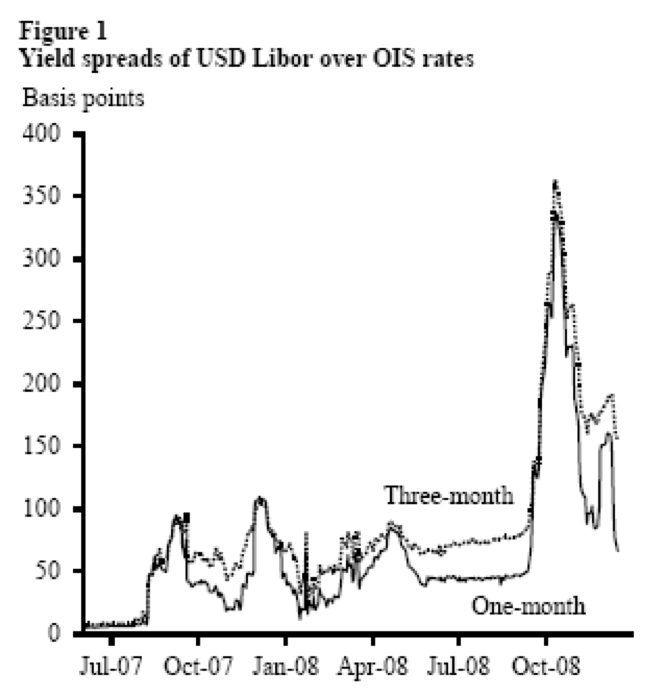
           The significance of Libor is much more substantial than many would believe, and actually extends deeply into the lives off all of us, probably without most knowing it. It is a benchmark rate that has large influence over government and corporate bond rates, credit card debt, bank loans, mortgages, and student debt financing. Libor is a large reason adjustable rate mortgages are so risky, especially when financial institutions are over exposed to debt, because if the Libor rate increases, and banks then have to pay much higher rates to cover that exposure by borrowing money from another bank, the rate we pay then will increase drastically as well. This is what allowed the 2008 financial crisis to become a worldwide economic downturn. Banks literally had no cash and couldn’t secure loans from other banks with such little liquidity; when adjustable rates kicked-in in late 2007, mortgage bond value began to cripple, causing Libor to spike. Banks had a daunting amount of debt exposure and didn’t think anyone would pay them back. Meaning, since the risk was much greater to loan money at that time, they would only agree if the other party signed into paying very high interest on the loan–risk per reward.

Libor has been a major talking point since 2012 when a scandal was uncovered showing banks worldwide had been misrepresenting rates to manipulate derivative markets, boost profits, and mislead the public on their stability. For a rate that the entire world relied on to accurately measure and price debt, this was a BIG problem.

My Action for Nike

There are only two courses of actions that Nike can exercise. Either Nike continues to stick to their past practices of using tax-havens to mitigate their total expenses and optimize their profits, or they can say goodbye to the “dog days,” and begin acting ethically by paying their taxes to the US government. I understand that Nike needs to be a competitive firm and any way they can minimize their total expenses now, it will pay in dividends later (quite literally). Knowing this though, it’s important to act legally and ethically. Both are critical for a brands success, and Nike doesn’t have a good track record when it comes to controversies: discrimination, sweatshops, and child labor just to name a few.

There are a lot of companies that operate with the tax-havens in mind. Despite the goal of the firm being clear, you shouldn’t look past ethical values. Nike should stop cutting costs by using their subsidiaries as pawns and critical to their profitability. Looking at this issue with a deontological framework, it should be the duty of the managers and senior executives to make the right decision and think about their consumers. Ultimately the consumers are footing the bill in the economy. Nike not paying their fair share of taxes to the United States also sets a poor example for corporations that have not yet engaged in these practices. “Nike did it, maybe we should do it.” I think that Nike’s duty is to serve their people and their country contributing financially.

You could also look at this by saying the duty of any firm is to maximize revenue and reduce expenses so they can pass on profits to their shareholders. One pebble in the pond makes an impactful ripple effect in the whole pond. If Nike gave up their past practices, maybe it might start a chain reaction from other corporations jumping aboard the ethical train.

At the end of the day Nike is a company that has thousands of employees and millions of customers. It’s important that Nike’s bottom line is met while being legal. Ethical decisions in the short run might impact profitability significantly, but they might positively contribute in the long run to the image of Nike. One of Nike’s competitive advantages include their powerful and recognizable brand/logo. It’s influences many people across the globe. If Nike became a firm that payed its domestic taxes like most companies, it might be the next boost to their brand that will pay dividends both intrinsically and extrinsically.

Nike and the Media’s Response

The media has been particularly critical on many companies performing these tax-avoidance strategies.

Reporter Max Haldevang from Quartz described his take. “Well, apart from the fact that it forces ordinary people and smaller companies to pay more taxes to keep up the roads, schools, and military, it also makes a mockery of trickle-down economics.” Max expresses the downside of companies, specifically Nike in this case, utilizing these tax havens are not good for the economy as a whole. Since the big corporations are not paying domestic taxes to Uncle Sam, it inherently passes on the expenses to the individuals that do pay the taxes. Less tax revenue allows for a weaker infrastructure, which isn’t good for anyone. The amount of potential revenue that the government has lost out on in taxes is insane, because this money could be put to good use in today’s society.

Nicholas Lord, who works for the University of Manchester as a lecturer points out that “Tax avoidance not only shifts funds away from the public purse – which is even more pertinent in times of budgetary austerity and economic uncertainty (think Brexit) – but also undermines perceived social fairness. There is an improper transfer of money away from public goods.” This in turn creates a wider inequality gap than before. The poor continue to pay the taxes while the rich corporations barely pay their dues.

The majority of articles that I researched came up with the same central concept of tax-avoidance being unethical. I think a rational person can recognize that these business practices undermine the whole idea of a tax. If there is a country-wide tax of 15% and no one is paying it, what’s the point of even having the tax enacted?

There is almost an entire finance industry devoted to minimizing taxes. MSNBC reporter John Schoen describes “NOBODY LIKES paying taxes. And there’s nothing illegal about trying to be clever and creative about using the rules to pay as little as you have to. But evading taxes lands you in jail. Navigating that legal gray area — between avoiding and evading — has produced a lucrative business for accountants and lawyers offering to help clients cut their tax bills.”

In a competitive market, when the other top corporations are unethically sheltering funds and maximizing wealth, how can you compete when you are artificially handicapping yourself by paying more money than your competitors are? Unless every corporation stops, I don’t see why Nike would slow their progress while they are in the lead.

https://qz.com/800678/if-apple-nike-and-365-other-fortune-500-companies-repatriated-their-offshore-riches-theyd-have-to-pay-718-billion-in-us-taxes/

https://theconversation.com/tax-avoidance-might-be-legal-but-its-time-we-seriously-questioned-its-ethics-87133/

http://www.nbcnews.com/id/3072510/t/tax-shelters-still-pushing-legal-limits/#.XK0kMiJKhD8

Nike’s Response

Nike has been pretty silent in terms of responding to criticism of their corporate plans. There were only two quotes that I found on the topic of tax avoidance and accusations of unethical behavior regarding this topic.

2016 Statement: “We fully comply with tax regulations, and we rigorously ensure our tax filings are fully aligned with the economic substance of how we run our business.”

2017 Statement: “Nike’s tax structure reflects our business structure. It is designed to facilitate the delivery of our products and services in the most efficient and cost-effective way to our consumers.”

Image result for nike tax evasion

From hours of research, I think that it’s apparent that Nike doesn’t like explicitly talking about their tax-strategy to the public. The 2016 quote relays the idea that Nike sees themselves being legally in-line with the regulations, which gives them the green light to continue with their practices. The “…fully aligned with the economic substance of how we run our business,” quote explains to us that they are fully aware of their and make a conscious effort to push the tax-avoidance policy to assist in the profitability of the company. There’s no shame in owning up to something that you do, and especially since there are a lot of corporations that stand by their policies of offshoring, many are beginning to believe that it’s ethical. I see the 2016 statement as Nike saying “hey its not illegal, so we are okay.” Looking into the 2017 statement, they continue to stick to their guns of, reinforcing that their current tax structure allows for them to be the “most efficient” and “cost-effective.” In 2017, The Panama Papers were released, which exposed many tax-dodgers, and Nike was one of them. This quote just reinforces their lack of reaction/action to the situation. They are making a conscious effort to continue dodging taxes and there is no guilt about their unethical practices either. To Nike, it’s not even a problem!

https://www.theguardian.com/news/2017/nov/06/nike-tax-paradise-papers

Nike Could Owe Billions In Back Tax If New EU Probe Finds Against It

Nike Background

Nike was founded by Phil Knight and Bill Bowerman in 1964. Nike is actually the Greek God of Victory. Nike initially started out selling athletic shoes. Their unique designs and extraordinary performance propelled the brand to eventually open up appeal and sports equipment divisions. The company boasts more than 73,000 employees as of 2018. Their success is attributed to their core values and motivational motto pairing great with impressive marketing methods. From 1976-1980, Nike obtained more than 50% total market share in the shoe market, and their powerful brand was born. The trademark Swoosh paired with their motto “Just Do It,” enables Nike to be one of the most recognizable brands in the world.

Nike’s mission is to push an active mindset and positive motivation to all across the planet. Through their inspirational branding and advertisements, they are able to successfully innovate unique styles, trends and fashions that are loved by many. Nike extends their gratitude back to their consumers by giving back them in philanthropic ways. Scholarships, grants, and donations fuel under privileged kids with equipment and fashion, while also enabling the young and talented to continue their athletic development. 5,700 employees are coaches in their personal communities, coaching kids to help them “find their way to a brighter future.” Nike is also involved in equity in all. Nike is an advocate for forwarding all races and genders and empowering us all to be the best star we can be. Nike’s Vision Statement says they want to be “the most authentic, connected, and distinctive brand.” Nike has successfully produced quality products for half a century and continues to be a powerful player by utilizing its powerful brand. Nike strives to be successful and accomplish their vision through discovering the right balance of their focus regarding their customers, profits, and the planet.

https://communityimpact.nike.com/

https://about.nike.com/

https://purpose.nike.com/

My Suggestion

To suggest that I have an end all solution to this massive, ever growing issue that I have relatively small knowledge of compared to the executives of this massive social media conglomerate, would be naive. However, I do believe there are some simple things that we can start with in the prevention of the spread of this fake news. One framework that will not work is one of egoism, and this is a concern of many. For Mark Zuckerberg to instill his sole morality into the actions of Facebook to prevent this fake news would be a massive disservice. An approach like this would completely undermine situations occurring all over the world in which societies often suffer as the result of false information spread through social media. Many have been critical of Zuckerberg’s morality and moral approach to Facebook as he has often denied how Facebook can be responsible for damaging information that has lead to the escalation of civil dissonance. My own suggestion for an approach is a combination of ethical frameworks. Beginning with utilitarian approach, Facebooks actions need to be beneficial for the highest number of their users while allowing each voice to be heard on the approach. I believe this begins with an open sit-down discussion with Facebook executives listening to specific stories of how this information damaged the lives of others. To understand the culture of Facebook within other regions of the world is critical to Facebook taking steps towards solving the issues. Another thing for Facebook to consider is just how large they are as a news outlet. Facebook needs to survey and determine how much of certain areas news is gained from Facebook alone. I believe this will help officials gain some perspective into how large the reach of their influence is. What comes next is to withhold the freedom of speech and the justice and fairness of each user to the highest standard. There is a balance that needs to remain intact before Facebook begins to place limits on certain news. If an algorithm is set in place to find fake news, it must be verified before taken down as this can be damaging to the sites most fundamental features. Using an approach that seeks to benefit the highest number of people globally while still remaining from sacrificing the rights of each user is, I believe, a very important step in the right direction. So where does this begin? I believe this begins with algorithms and AI put into place to seek out fake news which will then be verified by a group of employees. The employees need to be trained in what Facebooks ethical approach to the situation may be. That being said, to place the ethics of these fake news ads into the hands of individual employees can be concerning. That is why Facebook needs levels to this process and a system of checks and balances. Additionally, verification is critical. Facebook administrators need to be working with Facebook page owners and moderators to verify and maintain the integrity of the page. It is important that these pages are actively being monitored by multiple Facebook admins at all times. Finally after these types of monitoring are put into place, there needs to be a level of transparency both internally and externally to properly prevent situations like this. Facebook needs to do reporting, releasing monthly statements in multiple ethical areas on what the status of certain situations are and how they are working to prevent them. Some have even suggested that Facebook break up and be regulated in order to prevent the moral high ground of the officials negatively impact the ways in which the company handles these types of situations. What is for certain is that this problem is not going to stop any time soon and there is no way to eliminate it completely. What can be done is to regulate, control, and prevent the spread of fake news using a team of experts within Facebook. What happens next is up to Facebook, and I certainly hope they are taking steps in the right direction to prevent the spread of fake news in the future.

Design a site like this with WordPress.com
Get started